Bunion Correctors: Do They Actually Work?
The honest answer: they can help how your bunion feels, and they cannot change what it is. Knowing the difference saves money and frustration.
Read the article →Most people measure a bunion in shoes: the dress pair that got donated, the boots that need breaking in on one side, the slow migration toward whatever is widest. Behind that bump is a foot gradually changing shape, and the honest news comes in two parts. Nothing but surgery moves the bone back, yet most bunions can be kept comfortable for years without an operation, and knowing which camp yours is in is the whole game.
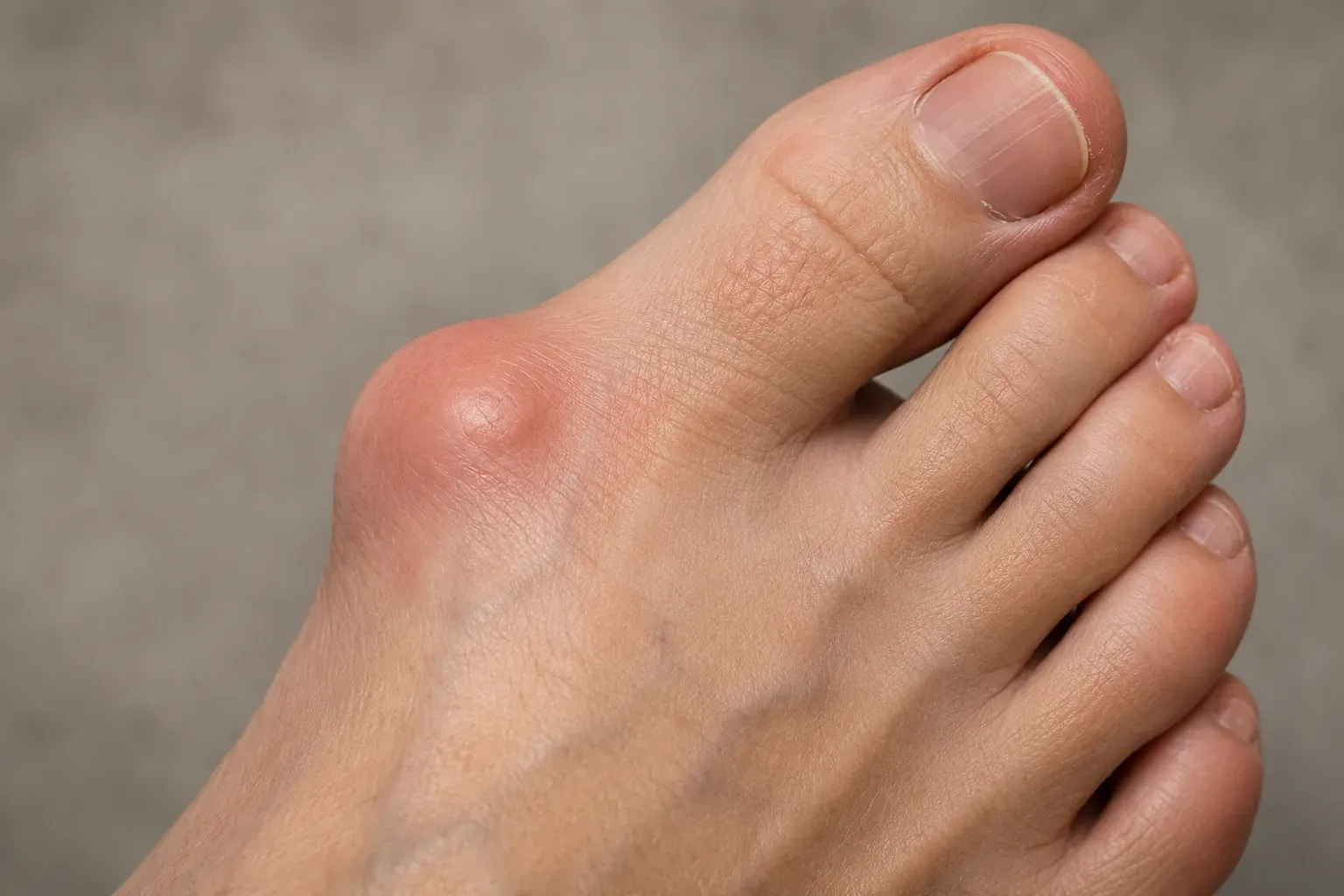
The bump on the side of your foot is not a growth; it is a joint out of position. In a bunion (the medical name is hallux valgus), the long bone behind the big toe, the first metatarsal, drifts outward while the big toe leans inward toward its neighbors, and the joint between them pokes into your shoe. Because the shift is structural and driven by mechanics, it tends to progress, sometimes over decades. Splints and creams can quiet the symptoms, but they cannot reposition bone, which is why the real skill in bunion care is judging when comfort measures are enough and when correction has earned its place.
Bunion pain has several possible sources, and they matter: the bump itself rubbing in shoes, the joint underneath wearing unevenly, or the second toe getting crowded out. Dr. McKinney sorts out which one is generating your pain, tests how flexible the deformity still is, and looks at the mechanics feeding the drift. In-office X-rays taken standing, with your weight on the foot, measure the actual angles between the bones; those measurements stage the bunion and anchor every recommendation, surgical or not.
Three good reasons to come in: the bunion hurts, it is visibly progressing, or it has started dictating your footwear. You do not need to be considering surgery to make the visit worthwhile; plenty of patients around here have walked on a bunion for twenty years, and many of them can be kept comfortable for twenty more with the right support. Getting it examined and measured now also means that if surgery ever does make sense, the timing can be chosen well instead of forced.
Call (336) 342-5701 promptly for: sudden severe pain, redness, and heat at the joint, which can be gout or infection rather than the bunion itself. Urgent foot problems are worked into the schedule faster.
Treatment starts with the simplest option likely to work and escalates only when needed.
Most bunion pain is the bump meeting a shoe that's too narrow for it. A properly wide toe box removes that collision, and gel padding or toe spacers handle the rest. Cheap, immediate, and often all that's needed.
If your foot rolls inward and shoves load through the big toe joint sideways, orthotics correct that motion, easing today's pain and taking pressure off the drift that's driving progression.
A bunion that suddenly turns red and angry usually means the bursa over the joint has flared. Targeted treatment settles it within days, and the exam confirms it isn't gout wearing a bunion's disguise.
When pain persists despite good shoes and support, surgery realigns the metatarsal itself, and current techniques have shortened recovery considerably compared to what your parents may remember. Before anything is scheduled, you get the unvarnished version: which procedure fits your X-rays, and what each week of recovery actually looks like.
Mostly no. Bunions run in families because foot structure and mechanics are inherited; look at your parents' feet and you'll often see the preview. Narrow, tapered shoes did not create the tendency, but they can speed it up and they certainly make it hurt, which is why footwear is the first thing addressed.
The pain very often can; the bump cannot. Wide shoes, spacers, padding, and orthotics manage symptoms and may slow progression, but the bone stays where it has drifted. That's not a reason for gloom: a comfortable, well-managed bunion may never need an operation at all.
It depends on the procedure your bunion's severity calls for, which is exactly what the X-rays decide. As a general shape: protected walking early in a surgical shoe or boot, a return to regular footwear over the following weeks, and swelling that takes months to fully fade. You'll get a week-by-week rundown for your specific procedure before you commit to anything.
Yes. Age alone rules nothing out, and doing nothing has costs too: a painful bunion changes how you walk and can feed knee, hip, and balance problems. Many older patients get comfortable with conservative care alone, and for those who need more, health and activity level matter far more than the number of birthdays.
The honest answer: they can help how your bunion feels, and they cannot change what it is. Knowing the difference saves money and frustration.
Read the article →Four real options, very different success rates. An honest comparison before you spend another year on the wrong one.
Read the article →Every ingrown toenail is angry; not every one is infected. Here's the line, and what crossing it means.
Read the article →One visit at our Reidsville office gets you a diagnosis and a plan. Call (336) 342-5701 or book online.